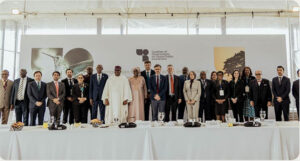
Credit: Coalition of Governments on Global Public Investment
By Ben Phillips
BANGKOK, Thailand, Jun 22 2026 – The fallout from the sudden collapse of the old system of financing international cooperation has been disastrous, unleashing a wave of harm and leaving the world more vulnerable to shocks and less able to respond to them. The wreckage is plain to see. The issue is what to do next.
Calling attention to the damage done, several commentators in the Global North have made the case for putting back up what had been pulled down. That will not happen, however. The crisis of financing for international cooperation was a reflection of a crisis of support for the model, and for the narrative of paternalism it embodied. The structure collapsed so fast because it was unsound.
Another set of commentators in the Global North, calling themselves “realists”, have advanced two low-hope ideas for the future international cooperation.
One idea put forward is to accept and find ways to cope with ever shrinking resources for shared global challenges, trying to “do more with less”. This approach would fail. The real-world consequence of attempting it would be failing to adequately resource collective responses to global threats – including pandemics, energy insecurity, natural disasters, and more. This would be existentially dangerous, and orders-of-magnitude more costly for every country than tackling shared threats upstream.
Another idea put forward is to ask the private sector to take over responsibilities which have previously been intergovernmental. This approach would fail too. The real-world consequence of pursuing it would not only be desperately inadequate resourcing of shared threats, and the supercharging of extreme inequality, but also the surrender of accountability and power to oligarchy.
This triptych of unworkable ideas – keep trying to restore the old order, accept managed decline or hand over to the private sector – dominates much of the attention in the Global North.
Thankfully, however, a growing group of Global South governments have been hard at work shaping a solution for the financing of shared global challenges.
Co-convened by the Foreign Ministers of Senegal and Colombia, more than 30 countries have come together in the Coalition of Governments on Global Public Investment, to transform the current global inflection point into a moment of renewal.
“Our challenges are shared; our risks are shared; and increasingly, our solutions must also be shared,” observes Martín Clavijo, Director of Uruguay’s Agency for International Cooperation. “We need an evolution in how we understand cooperation towards a framework in which all countries contribute according to their capacities, all benefit according to their needs, and all participate as equals in decisions about the use of resources.”
“Global public investment is the smart, 21st-century answer to how governments can work together to overcome the challenges and crises that affect us all,” remarks Rosa Yolanda Villavicencio Mapy, Minister of Foreign Affairs of Colombia and co-chair of the coalition. “A significant increase in public financing is essential — and crucially, these resources must be governed under more representative and effective frameworks.”
“We are moving beyond traditional donor-recipient paradigms, towards a more horizontal, inclusive, and partnership-based approach,” shares Cheikh Niang, Minister of Foreign Affairs of Senegal and co-chair of the coalition. “All countries, regardless of their level of development, have both contributions to make and legitimate expectations to express. To solve our national, regional, and global problems, we can’t rely on philanthropy alone, and we can’t just look to the private sector to save us. We need more and better public money to solve our collective challenges.”
Launched in July 2025 at the Fourth International Conference on Financing for Development, the coalition held its inaugural planning meeting in September 2025 on the sidelines of the United Nations General Assembly. This year the governments have gathered in Bogota in March, and in Nairobi in May, and will gather again in New York in September.
Anchored in the Global South, the coalition is also reaching out to countries in the Global North. “We are not looking for sympathy. What we want is an equal partnership,” emphasises Samuel Okudzeto Ablakwa, Minister of Foreign Affairs of Ghana.
“The future of international cooperation must evolve toward approaches that better reflect shared responsibility and collective interest,” points out Limpho Tau, Minister of Foreign Affairs of Lesotho.
The governments are working closely with civil society. “The leaders coming together are pioneers renewing and remaking multilateralism,” says María Elena Agüero, Secretary General of Club de Madrid. “The approach they’re developing together will be fairer than approaches inherited from the last century, by ensuring all countries have a voice and a stake. It will also be much more effective, helping to improve lives across the world.”
The leaders insist on the need to go beyond simply cushioning the present disruption. They are clear that past approaches will not and should not return. Instead, they are working to turn breakdown into breakthrough by bringing countries together as equals to redesign international finance for an interdependent world.
“There is an urgent need for a renewed international financial architecture that is more inclusive, more representative and better aligned with contemporary global realities,” observes Korir Singoei, Principal Secretary, Department for Foreign Affairs of Kenya.
“Do we want to be the generation that managed a crisis — or the generation that transformed the course of global cooperation?” asks Javier Eduardo Martínez-Acha Vásquez, Minister of Foreign Affairs of Panama. “Global public investment can enable us not only to transform international cooperation but to transform the future of humanity.”
The leaders have put together a roadmap for transforming international cooperation by 2030: “A great deal of intellectual effort has been made over years to ensure that an appropriate model was brought forward,” remarks Alva Baptiste, Minister of Foreign Affairs of Saint Lucia. “Now”, he concludes, “we are mandated to get airborne.”
Ben Phillips is the author of How to Fight Inequality, and Public Good: Building a Winning Narrative to Bring the World Together.
IPS UN Bureau
!function(d,s,id){var js,fjs=d.getElementsByTagName(s)[0],p=/^http:/.test(d.location)?’http’:’https’;if(!d.getElementById(id)){js=d.createElement(s);js.id=id;js.src=p+’://platform.twitter.com/widgets.js’;fjs.parentNode.insertBefore(js,fjs);}}(document, ‘script’, ‘twitter-wjs’);