By CIVICUS
Jul 22 2026 –
CIVICUS discusses land grabs and environmental damage linked to a luxury coastal resort project with Eva Kushova, Director of Destination Management Organisation Albania, a civil society organisation that supports sustainable tourism in Albanian destinations, seeking to preserve culture and nature while maximising benefits for communities.
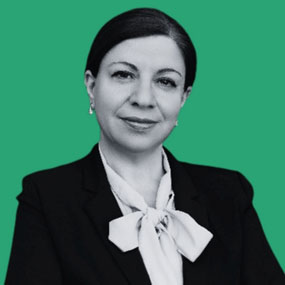
Eva Kushova
Since May, protests have rocked Albania over a luxury coastal resort project linked to US President Donald Trump’s family, to be built on protected land near Vlorë. Protests, now dubbed the ‘Flamingo Revolution’, have spread nationwide and won diaspora support, broadening into an anti-corruption movement.
What are the impacts of Albania’s foreign investment laws?
The Law on Strategic Investments was passed in 2015 to attract foreign investment and boost Albania’s economy. Its deadline has since been extended several times, most recently to 2027. In practice, it has become a vehicle for serious abuses. Unlike ordinary investment laws, it gives the state the power to expropriate private property on investors’ behalf, often at compensation well below market value. Some residents say they were forced off their land after refusing this compensation.
Despite the law’s stated purpose, only two of around 44 projects approved so far are genuinely foreign investments. Most are owned by domestic investors with close connections to the government. The system gives selected companies access to public land, beaches, forests and national assets, and grants them tax exemptions for up to 10 years. The state also pays for all the necessary infrastructure, including electricity, roads, telecommunications and water, effectively subsidising private profit. In some cases, water meant for villages has been diverted to supply resort swimming pools. Meanwhile, local communities lose beach access and remain economically marginalised.
What does the Zvërnec case reveal about how these deals are made?
The Zvërnec project, a luxury resort planned on the coast near Vlorë, in southern Albania, comprising around 10,000 accommodation units, drew international attention because of its Trump family ties, but it exposed broader governance failures. It includes a large property allegedly acquired by an internationally wanted drug trafficker under highly questionable circumstances, and there are also allegations that officials manipulated property records at the regional land registry. Many local residents claim ownership of the property, yet it was suddenly recognised as belonging to the trafficker, who then sold it to Arab investors.
This fits a wider pattern in Albania’s land governance. After communism collapsed in 1991, the law mandated redistribution of agricultural land to rural families in small parcels. Thirty-five years on, most Albanians own only limited land, while strategic investors obtain vast coastal properties through questionable transactions, controversial expropriations and alleged manipulation of property records. Property rights have remained unresolved for over 30 years, forcing people into costly court proceedings.
The secrecy around the Zvërnec deal is typical too. The public only learns about the projects once construction machinery arrives on site. News of Zvërnec, and of Sazan Island, an island off Albania’s Adriatic coast earmarked for luxury development, broke via international media in March 2024. Even now, the identity and ownership of the investors behind several of these projects remain unclear, and sites are fenced off with barbed wire. Authorities say this is in preparation for infrastructure works, fuelling further distrust.
What environmental damage have these developments caused?
The Zvërnec coastline is home to the Narta Lagoon, one of Albania’s most biodiverse areas and a critical stopover for thousands of migratory birds travelling between Africa and Europe. It was first threatened by the construction of Vlora International Airport and now by the Zvërnec resort.
The legal groundwork was laid in 2022, when the government removed thousands of hectares from protected areas, cutting total coverage by 20 per cent. In 2024, another law opened the door to construction inside protected areas, allowing for the transformation of one of Albania’s last wild coastal lagoons into a heavily urbanised area. A further law passed in 2025 extended the threat to forests and pastures elsewhere in the country.
This runs counter to Albania’s European Union (EU) membership bid, targeted for 2030. All candidate states must align their laws with EU standards across 33 negotiating chapters before joining, and chapter 27 covers environmental protection. The European Commission’s 2025 Enlargement Report raised serious concerns on this front, criticising recent legal changes for weakening environmental standards. The Bern Convention’s Standing Committee, an international body that protects European wildlife and habitats, has repeatedly asked Albania to suspend construction of Vlora International Airport inside the Pishë Poro–Narta Protected Area, which includes the lagoon, pending proper environmental assessment. So far these requests have gone unheeded. But sustained EU pressure could still force a repeal of regressive laws and the introduction of stronger protection for natural areas.
What has driven recent protests, and how has the government responded?
Protests began on 23 May in Zvërnec after the developer fenced off part of the beach with barbed wire. They intensified after footage emerged on 30 May showing private security guards beating a protester while police stood by without intervening. The movement spread to the capital, Tirana, the next day, then to other Albanian cities, Kosovo and diaspora communities abroad, becoming known as the ‘Flamingo Revolution’. Protesters have marched nightly since under the slogan ‘Albania is not for sale’, demanding the project’s cancellation and Prime Minister Edi Rama’s resignation.
What began as opposition to a single resort has broadened into a wider anti-corruption movement, with protesters citing grievances such as poor public healthcare. A nationwide protest on 10 June deliberately coincided with a national historic commemoration, joined by Albanians from the diaspora on five continents. Yet Rama has stayed defiant, arguing that the backlash has more to do with the Trump links than with the project itself.
There are encouraging signs of accountability, though. The Special Structure against Corruption and Organised Crime, an independent judicial body created in 2016, has opened an investigation into the 2024 legal changes that enabled the Zvërnec deal. Arrest warrants have been issued against around 20 businesspeople suspected of illegally obtaining land or permits linked to various projects. People hope public pressure will keep judicial investigations alive, ensuring accountability for abuses of power, environmental damage and property rights violations.
CIVICUS interviews a wide range of civil society activists, experts and leaders to gather diverse perspectives on civil society action and current issues for publication on its CIVICUS Lens platform. The views expressed in interviews are the interviewees’ and do not necessarily reflect those of CIVICUS. Publication does not imply endorsement of interviewees or the organisations they represent.
GET IN TOUCH
Website
Facebook
Instagram
LinkedIn
Twitter
SEE ALSO
Albania: protesters and police clash at anti-corruption demonstrations; amendments partially decriminalising defamation criticised CIVICUS Monitor 22.Apr.2026
Albania: ‘Corruption is a serious problem, but no political force commands enough public trust to unite demands’ CIVICUS Lens | Interview with Gresa Hasa 13.Feb.2026
Albania: ‘Diaspora voting ensured every citizen, regardless of location, could exercise their right to vote’ CIVICUS Lens | Interview with Erida Skëndaj 01.Jun.2025
!function(d,s,id){var js,fjs=d.getElementsByTagName(s)[0],p=/^http:/.test(d.location)?’http’:’https’;if(!d.getElementById(id)){js=d.createElement(s);js.id=id;js.src=p+’://platform.twitter.com/widgets.js’;fjs.parentNode.insertBefore(js,fjs);}}(document, ‘script’, ‘twitter-wjs’);